
A Seasonal Sale Calendar: When Things Commonly Go on Sale
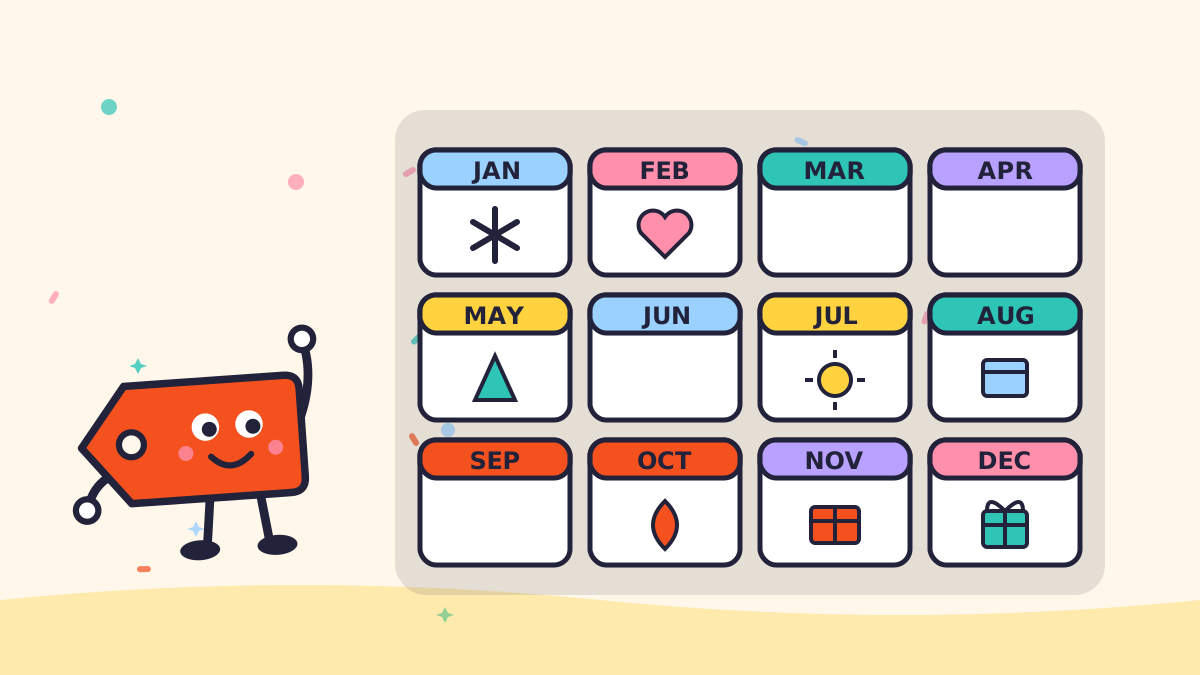
Retail runs on a calendar. Stores plan inventory months ahead, bring in new seasonal stock on a schedule, and need to clear the old stock to make room. That rhythm creates patterns that repeat most years. Knowing them will not guarantee a price, but it helps you decide whether to buy now or give it a few weeks.
The calendar below reflects widely observed patterns in US retail. Individual stores and years vary, and online retailers increasingly run sales all year, so treat each month as a tendency, not a promise. Pair it with price tracking to confirm what a specific item is actually doing.
Month-by-month patterns
| Month | Often discounted | Why |
|---|---|---|
| January | Bedding, towels and linens ("white sales"); winter clothing; fitness gear; holiday décor | Post-holiday clearance and new-year promotions |
| February | TVs (ahead of big sporting events); winter apparel; some furniture around Presidents' Day | Event promotions and ongoing winter clearance |
| March | Winter sports gear; some luggage | End of the cold season |
| April | Spring cleaning supplies; rain gear | Seasonal promotions |
| May | Mattresses and appliances around Memorial Day; some outdoor gear | Holiday-weekend events |
| June | Some tools and grills around Father's Day; gym memberships | Gift promotions; slower gym season |
| July | Large online summer sale events; summer clothing clearance begins | Mid-year events and making room for fall |
| August | School supplies, laptops, dorm items; state sales-tax holidays in some states | Back-to-school season |
| September | Outdoor furniture and grills; previous model-year cars; some appliances around Labor Day | End of summer; new models arriving |
| October | Early holiday promotions; some camping gear | Retailers start the holiday season earlier each year |
| November | Electronics, toys, small appliances, many categories around Black Friday and Cyber Monday | The biggest promotional period of the year |
| December | Gift cards with bonus offers; post-Christmas clearance on décor and wrap | Last-minute and after-holiday clearance |
Why the big events are not always the lowest price
Large sale events bring real discounts, but they also bring special product variants, bundles and "doorbusters" in limited quantities. Some items sold during big events are models made or packaged specifically for that period, which makes direct price comparison harder. And because everyone expects a discount, some prices drop to their usual sale level rather than an unusual low.
Price history is the best defence. If a chart shows the same item hitting the same price several times a year, the event price is fine but not special, and you do not need to rush.
Clearance follows the seasons, not the calendar page
The deepest markdowns often come at the end of a season, when a store is clearing space, rather than during named events. Summer items get cheaper as fall stock arrives; winter coats get cheaper as spring lines take the floor. The trade-off is selection: by the time a category is heavily discounted, sizes and colours may be limited.
- Buy seasonal items one season ahead if you have space to store them and are sure of sizes.
- Check clearance sections regularly in the weeks after a season ends, as markdowns often happen in steps.
- Confirm the return policy, since clearance items are sometimes final sale.
How to use a sale calendar without waiting forever
A calendar is a planning tool, not a reason to postpone everything. If your washing machine breaks in March, the cost of waiting until a holiday weekend may be more than the discount. A simple rule of thumb: if the purchase can wait and a relevant sale season is within about six weeks, it is often worth waiting and tracking. If it is further away or the purchase is urgent, buy the best total-cost option available now and move on.
It also helps to keep a running list of non-urgent purchases with a target month next to each. When that month arrives, check prices, confirm the item is still needed, and buy only what is on the list. That is the difference between using sales and being used by them. Our budgeting guide shows one way to set that money aside in advance.
If you shop mostly online, remember that many large retailers now run their own branded sale events at points in the year that do not line up with public holidays. Signing up for price alerts on specific items tends to be more reliable than trying to memorise every store's event schedule. Alerts follow the item rather than the calendar, so they catch the dip whenever it happens.
A word on sales-tax holidays
Some US states hold sales-tax holidays, often in late summer for back-to-school items, where certain goods under a price limit are exempt from state sales tax for a few days. The states, dates, eligible items and limits change from year to year, and local taxes may still apply, so check your state revenue department's official page for the current year's rules.
Frequently asked questions
Is Black Friday really the cheapest time to buy electronics?
It is often one of the better times, but not always the absolute lowest. Many items reach similar prices at other points in the year. Price history for the exact model is more reliable than the date.
When is the best time to buy clothing?
End-of-season clearance tends to bring the deepest discounts, as stores make room for the next season. Selection is thinner by then, so it works best for basics and items you know fit.
Do these patterns apply outside the US?
Many are specific to US holidays and school calendars. Other countries have their own events and seasons, though end-of-season clearance is common almost everywhere.
Should I wait for a sale on something I need now?
If the need is real and the next relevant sale is more than a few weeks away, it is usually better to buy the best total-cost option now than to go without.
Related articles
 TimingPrice Tracking Basics: Watch Prices So You Don't Have to GuessHow price tracking works, how to read a price-history chart, how to set a sensible target price and alert, and when waiting is (and isn't) worth it.Read the guide
 BudgetingBudgeting for Deal Hunters: Save Money, Not Just PercentagesA simple budgeting approach for people who love a deal: planned-purchase lists, sinking funds, a 'deal buffer', and how to count savings honestly.Read the guide
 Deal basicsHow to Spot a Real Deal (and a Dressed-Up Regular Price)A practical way to tell a genuine discount from a big red 'was' price: reference prices, price history, total cost and the questions worth asking before you buy.Read the guide