
Budgeting for Deal Hunters: Save Money, Not Just Percentages
Deal hunting and budgeting can pull in opposite directions. A good deal feels like saving money, but a basket full of discounted things you did not plan to buy is still spending. The goal is to let deals lower the cost of things you already needed, while keeping impulse "savings" from quietly growing your monthly outgoings.
This is not a complete budgeting system. It is a set of habits that sit alongside whatever method you already use, whether that is an app, a spreadsheet or envelopes.
Count savings honestly
Retail receipts sometimes print a line like "You saved $23 today". That number compares what you paid with the reference prices, not with what you would otherwise have spent. If you would not have bought the items at all, you saved nothing; you spent the total.
A more honest way to track savings is to compare the price you paid with the price you expected to pay for something already on your list. If you planned to buy a kettle for around $40 and found the same kettle for $30, you saved $10. That $10 is real, and you can decide what to do with it.
Keep a planned-purchase list
A planned-purchase list turns sales from temptations into opportunities. It is simply a note of things you expect to buy in the next few months, with a rough target price and, if relevant, a target month from our seasonal sale calendar.
| Item | Needed by | Target price | Watch for |
|---|---|---|---|
| Winter boots for a child | Late October | Set from last year's receipt | Back-to-school and early fall promotions |
| Replacement bath towels | Any time | Your usual per-towel price | January linen sales |
| Laptop | Before spring term | Based on 3-month price history | Tracked price alert |
| Birthday gift | Specific date | Gift budget amount | Any sale before the date; return policy |
When a sale appears, check it against the list. On the list and at or under target: buy it. Not on the list: close the tab, or add it to the list and revisit in a week. Most impulse urges fade within a few days.
Sinking funds: pay for irregular costs in small pieces
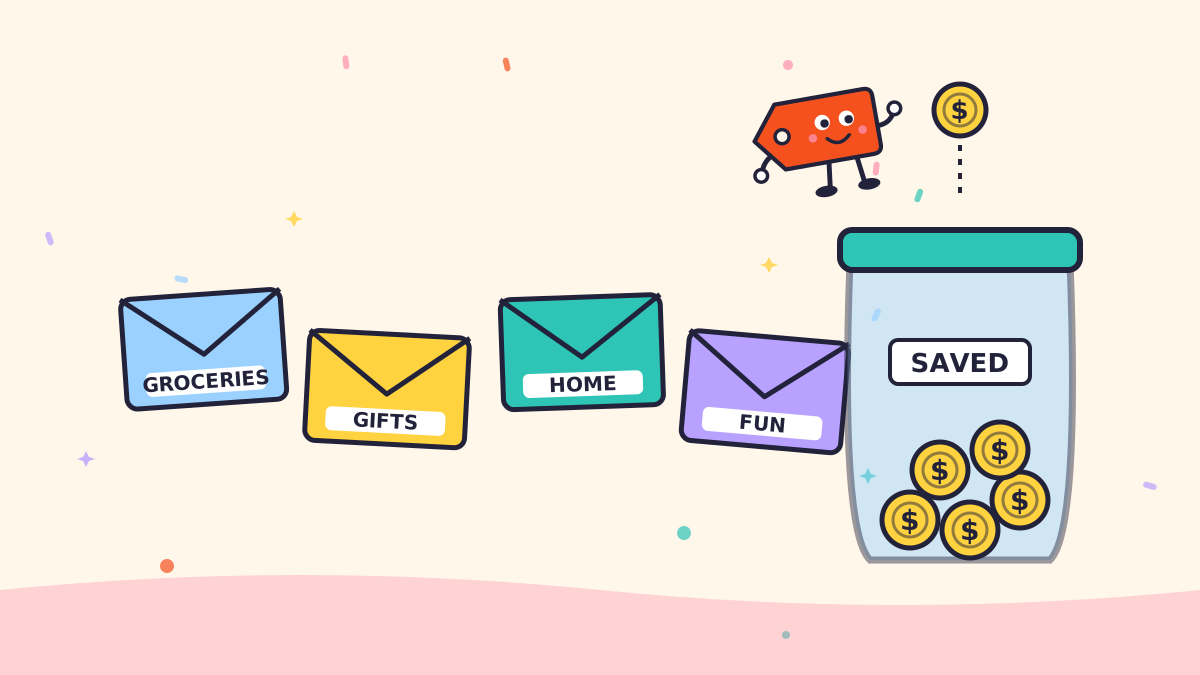
A sinking fund is money set aside each month for a known future expense, such as holiday gifts, car maintenance, back-to-school shopping or annual subscriptions. Instead of one large hit to a single month, you put aside a smaller amount regularly. Some people use separate savings accounts or sub-accounts; others use envelopes or a spreadsheet column.
Sinking funds and deals work well together. If your "home" fund already has money in it when a genuine sale on a needed appliance appears, you can act without putting it on a card you cannot pay off in full. That is often where the real saving comes from: avoiding interest, not the discount itself.
- List irregular expenses for the next twelve months and estimate each.
- Divide each by the number of months until it is due.
- Set aside those amounts each payday, even if they are small.
- Spend from the matching fund when a planned purchase comes up, ideally at a sale price.
A small "deal buffer" for the unexpected bargain
Sometimes a genuinely great price on something you will definitely use appears out of nowhere. A modest, fixed monthly deal buffer lets you say yes without derailing the budget. The rules that make it work: it is a set amount, it does not roll over into a huge pile, and when it is spent, it is spent until next month.
If you find the buffer runs out in the first week every month, that is useful information too. It usually means sale emails and app notifications are doing their job a little too well. Unsubscribing from a few promotional lists can do more for a budget than any coupon.
Where to put the money you actually save
Savings that stay in your everyday account tend to get spent without anyone noticing. If you track real savings against planned prices, consider moving that amount to a savings goal at the end of the month. Seeing the total grow is a better reward than any "you saved" receipt line, and it keeps the focus on money kept rather than on percentages.
Finally, check that the effort is proportionate. Spending an hour to save a dollar is a poor trade for most people. Save the deep research for larger purchases and regular essentials, where tools like unit pricing and price tracking add up over a year.
If you share finances with someone, agree on the planned-purchase list and the size of the deal buffer together. It avoids the classic situation where one person's bargain is the other person's surprise charge. A short monthly check-in over coffee is usually enough to keep it working.
Frequently asked questions
What is a sinking fund?
Money set aside in regular small amounts for a known future expense, such as gifts, car repairs or annual bills, so it does not arrive as one large unplanned cost.
How big should a deal buffer be?
Small enough that spending all of it would not affect essentials or savings goals. It is a personal number; the important part is that it is fixed and does not roll over indefinitely.
Should I unsubscribe from store emails?
If they prompt purchases you did not plan, it can help. You can keep a few from stores you buy from regularly and check sale pages when a planned purchase comes up.
Is a receipt's 'you saved' amount accurate?
It is accurate against the store's reference prices, but it does not show whether you would have bought those items anyway. Compare with your planned price instead.
Related articles
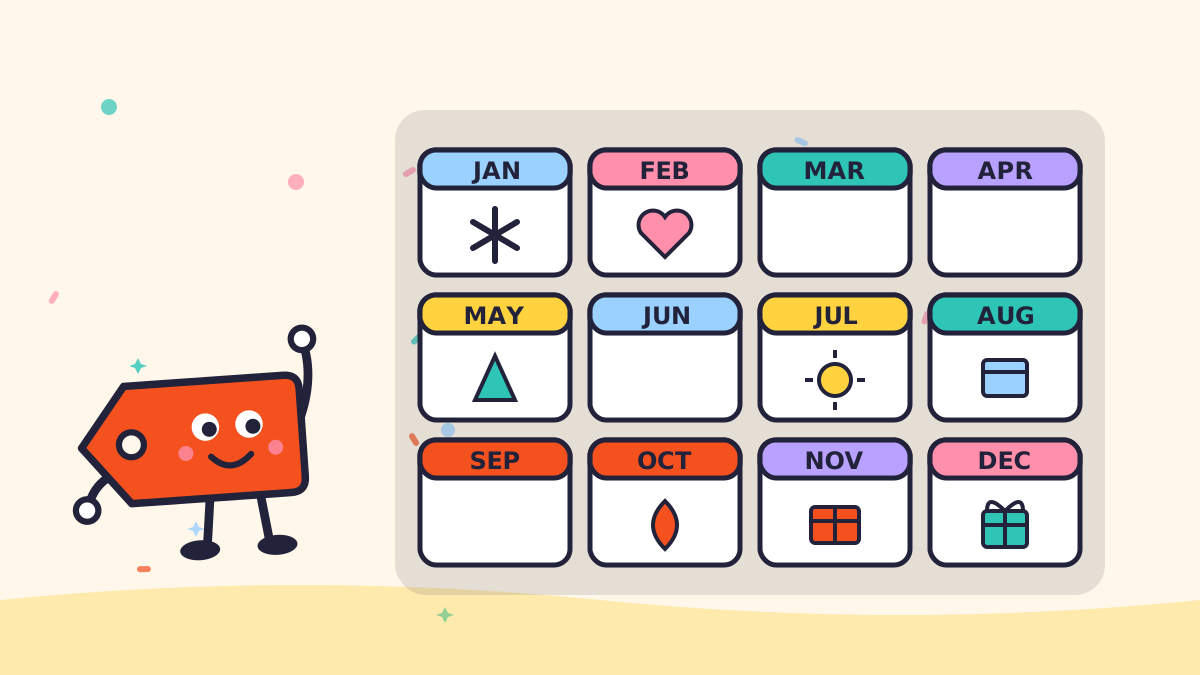 TimingA Seasonal Sale Calendar: When Things Commonly Go on SaleA month-by-month guide to the sale patterns many US retailers follow, from January linens to back-to-school and November events, plus how to use it without waiting forever.Read the guide
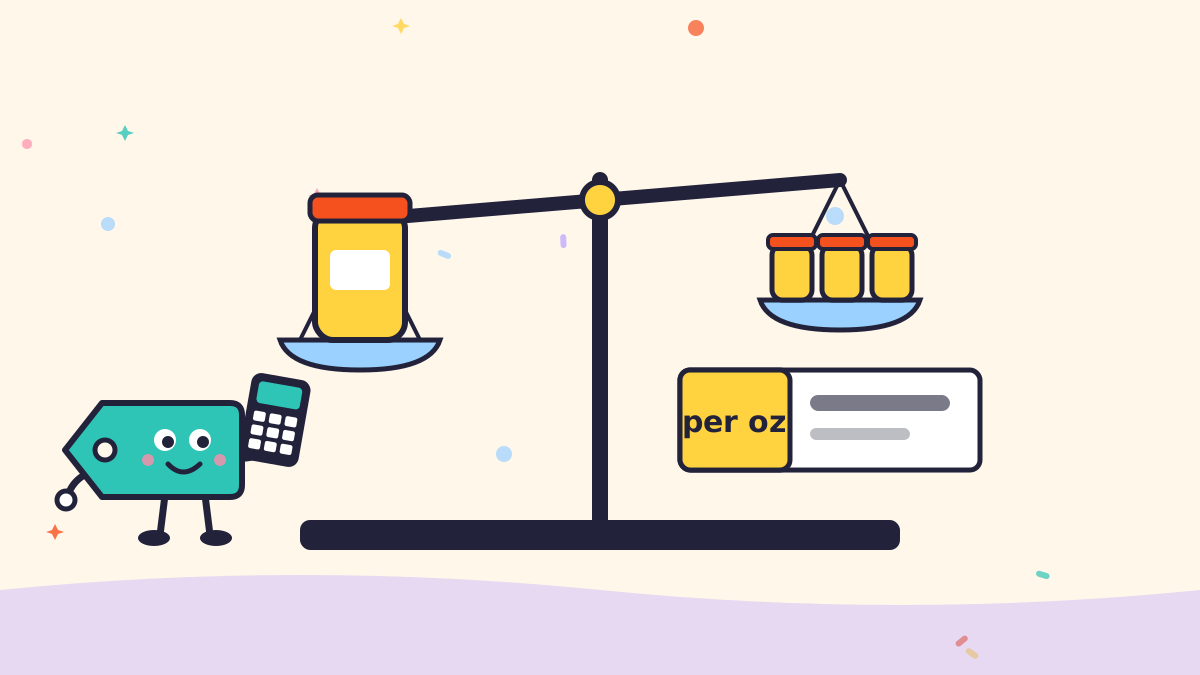 Everyday savingsUnit Price Math: The Five-Second Check That Beats Most Pack-Size TricksHow to read and calculate unit prices, when the bigger pack is not the better buy, and how shrinking pack sizes hide price rises.Read the guide
 CashbackCashback Portals and Card Rewards: How the Money Actually Comes BackHow cashback portals, card-linked offers and card rewards work, why cashback sometimes fails to track, and how to use them without overspending.Read the guide