
Price Tracking Basics: Watch Prices So You Don't Have to Guess
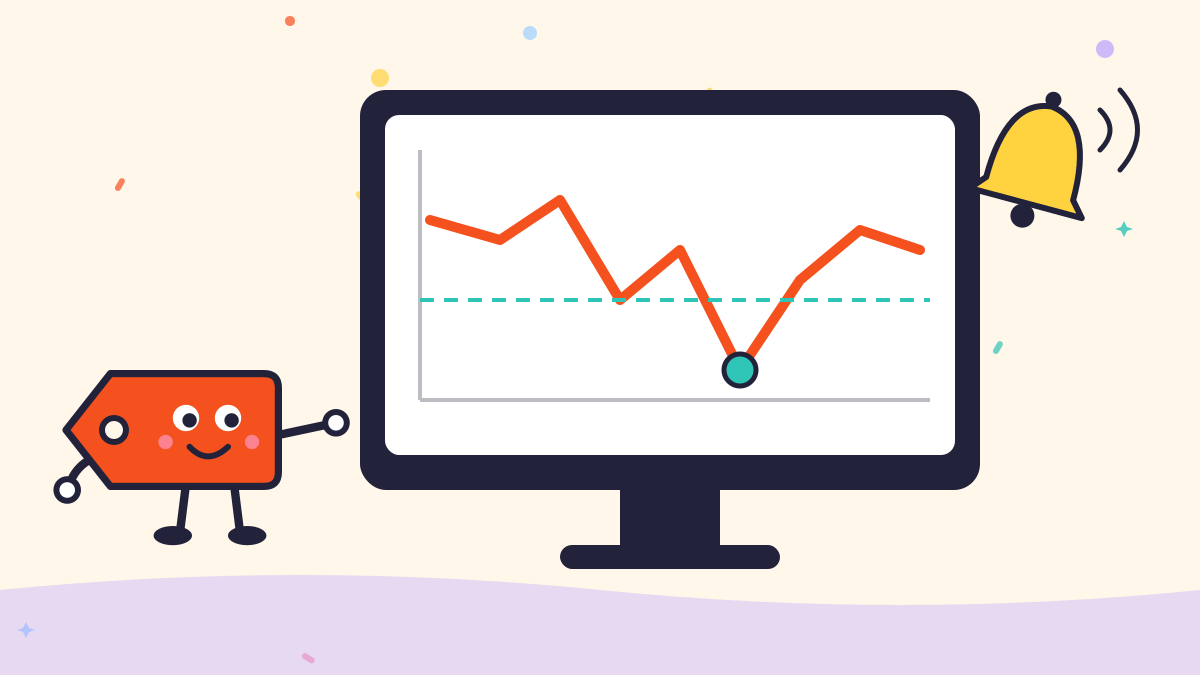
The hardest question in deal hunting is not "is this cheaper than the tag?" but "is this cheaper than it normally is?" Price tracking answers that second question. Instead of trusting a store's reference price, you look at what the item has actually cost over weeks or months and decide from there.
You can do this with browser extensions and price-history websites, with the "watch" or "save for later" features some retailers offer, or with a plain spreadsheet for the handful of things you buy regularly. The tool matters less than the habit.
What a price-history chart tells you
A price-history chart plots the price of one listing over time. Once you have seen a few, you start to notice common shapes, and each shape suggests a different strategy.
| Pattern | What it looks like | What it usually means for you |
|---|---|---|
| Flat line | The price barely moves for months. | Discounts are rare; a small drop may be the best you will see. |
| Sawtooth | Regular dips and recoveries every few weeks. | Patience pays. Set an alert near the bottom of the usual range. |
| Staircase down | Price steps lower over time, often as newer models arrive. | Waiting usually helps, as long as stock lasts. |
| Spike then "sale" | Price rises shortly before a sale event, then drops back. | The sale may simply return the item to its normal price. |
| Erratic | Frequent, large swings, common with third-party sellers. | Watch the seller as well as the price, and compare total cost. |
Setting a target price that makes sense
An alert is only useful if the target is realistic. Set it too low and it never fires; set it too high and it fires at a price that is not special. A practical approach is to look at the lowest prices in the chart over the last three to six months and set your target a little above that floor. That way you are notified when the item returns to its good range, not only when it hits an unusual one-off low.
Also decide in advance the price at which you would simply buy it now. Writing both numbers down, a "buy immediately" price and a "happy to wait" price, stops you from moving the goalposts when a flashy sale banner appears.
How to set up tracking in about ten minutes
- Make a short watch list. Pick items you genuinely plan to buy in the next few months. Tracking fifty things turns alerts into noise.
- Record the exact listing. Model number, size, colour and seller. Price trackers usually follow one specific listing, and a different variant may have a different history.
- Choose your tool. A browser extension or a price-history site for big online stores, the retailer's own wish-list alerts, or a spreadsheet with date, store and price columns.
- Set two numbers. Your target price for the alert and your "buy now" price.
- Review monthly. Delete items you no longer want, and adjust targets if the whole range has shifted.
A note on extensions: some price-tracking extensions ask for broad permission to read the pages you visit. Install only well-known tools, read what data they collect, and remove any you stop using.
When waiting is worth it, and when it isn't
Waiting makes sense when the chart shows regular dips, when a known sale season is close (see our seasonal sale calendar), or when a replacement model is expected and the current one is likely to be cleared out. It makes less sense when the item is something you need now, when the chart is flat, or when the likely saving is small compared with the hassle of going without.
There is also a quieter cost: attention. Watching prices is useful for larger or recurring purchases, but you do not need a tracking strategy for a phone case. Save the effort for items where the typical swing is large enough to matter to your budget.
Tracking in physical stores
Price tracking is not only for online shopping. For groceries and household basics you buy often, a note on your phone with the usual price at your regular store gives you a personal baseline. When a flyer claims a big saving, you can see immediately whether it beats your normal price. This works especially well paired with unit-price comparisons, since pack sizes change more often than people notice.
Common price-tracking mistakes
The most frequent mistake is tracking the wrong listing. Large stores often have several listings for what looks like the same product, sold by different sellers or in slightly different bundles, and each has its own price history. Another is reacting to a single dip without checking whether it is the usual sale price. A third is forgetting that the cheapest listing may come from a seller with slow shipping or a weaker return policy. When an alert fires, spend thirty seconds confirming the seller, the exact variant and the total cost before you buy.
Frequently asked questions
Do price trackers work on every store?
No. Most cover the biggest online retailers well and smaller shops patchily or not at all. For uncovered stores, a simple note of dates and prices works fine.
How long a price history do I need?
Three to six months shows most regular patterns. A full year also captures seasonal sale events, which is helpful for bigger purchases.
Can a store raise the price after I set an alert?
Yes. Alerts only tell you when the price crosses your target; they do not hold a price. If the item goes up, your alert simply waits.
Is it worth tracking cheap items?
Usually not individually. For low-cost items bought often, knowing your usual unit price is more useful than per-item alerts.
Related articles
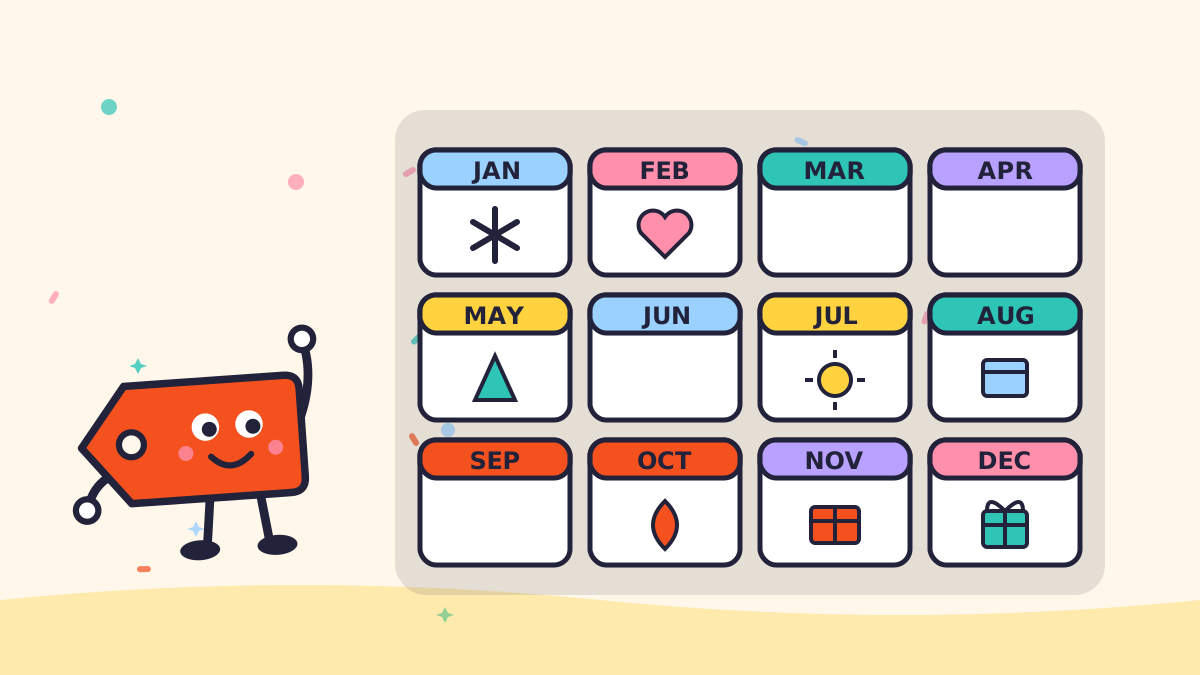 TimingA Seasonal Sale Calendar: When Things Commonly Go on SaleA month-by-month guide to the sale patterns many US retailers follow, from January linens to back-to-school and November events, plus how to use it without waiting forever.Read the guide
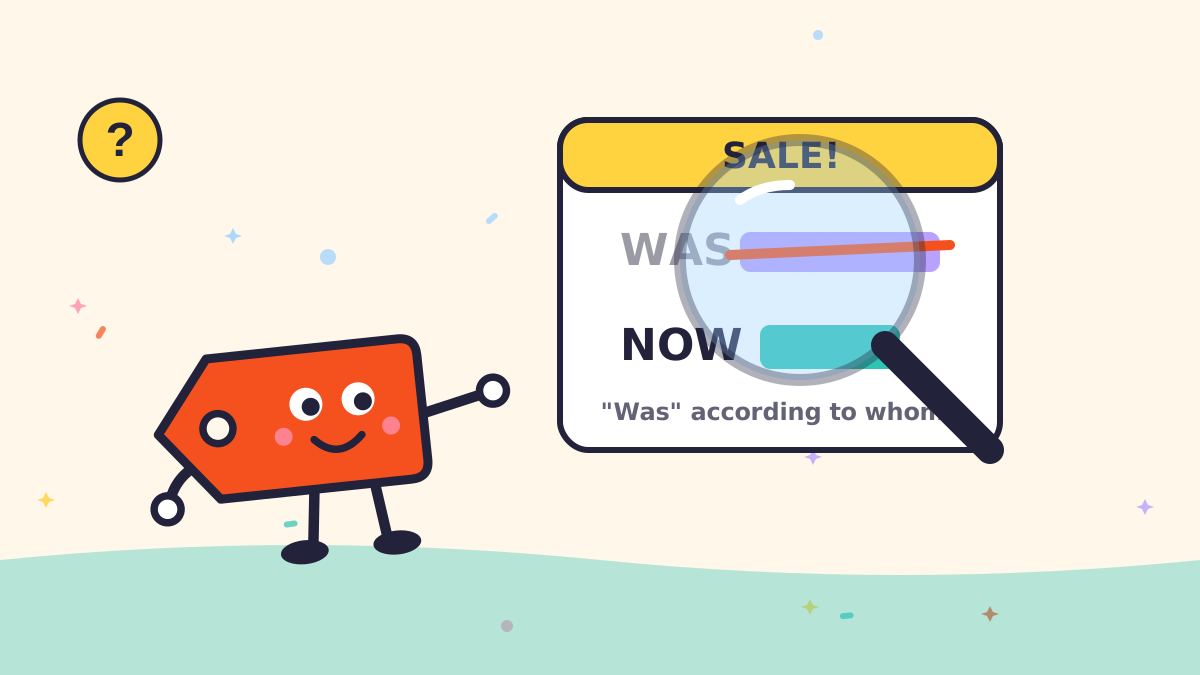 Deal basicsHow to Spot a Real Deal (and a Dressed-Up Regular Price)A practical way to tell a genuine discount from a big red 'was' price: reference prices, price history, total cost and the questions worth asking before you buy.Read the guide
 Store policiesPrice Matching and Price Adjustments: How to Ask, and When It WorksWhat price matching and post-purchase price adjustments are, the conditions stores usually attach, and how to ask politely with the right evidence.Read the guide