
Free Trials and Subscription Traps: Enjoy the Trial, Skip the Surprise Charge
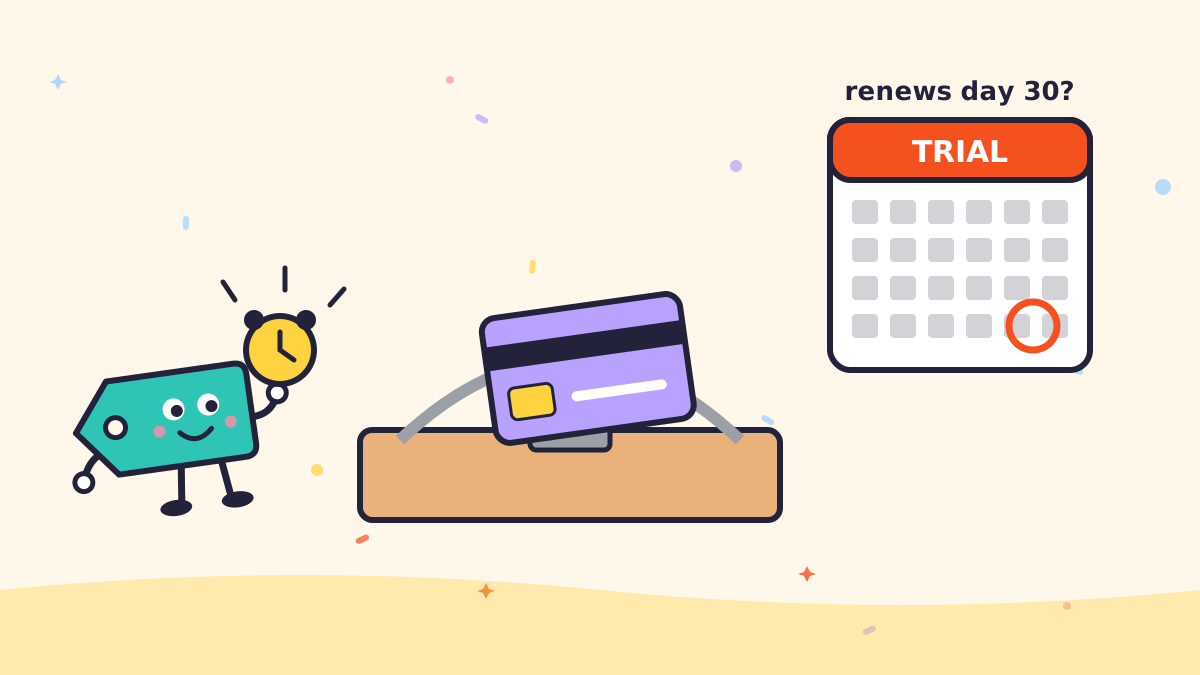
Free trials and introductory prices can be genuinely useful: a month to test a streaming service, a discounted first box from a meal kit, a cheap first year of a software plan. The catch is that most of them turn into paid subscriptions automatically, often at a higher price, unless you cancel before a specific date.
The business model relies partly on people forgetting. You do not need to avoid trials; you need a simple system so that you decide whether to keep paying, rather than letting the default decide for you.
How trials usually convert
Most trials ask for a payment method at sign-up. When the trial ends, the account moves to a paid plan and the card is charged. Introductory offers work similarly: a lower price for the first period, then the regular price. A few patterns are worth knowing:
- The end date may not be obvious. A "30-day" trial might end at a specific time on day 30, or earlier if it counts from the minute you signed up.
- Annual plans can renew annually. A discounted first year often renews at full price for another whole year.
- Cancelling can end access immediately. Some services end your trial access the moment you cancel; others let you keep it until the end date.
- Bundled add-ons. Some sign-up flows pre-tick extra services or upgrades.
Warning signs in a sign-up flow
Regulators in the US and elsewhere have increasingly focused on subscription practices, including clear disclosure of terms and easy cancellation. Rules differ by place and continue to change. As a shopper, these are the signs that a trial deserves extra care:
| You see | What to do |
|---|---|
| No clear price after the trial | Find the regular price before entering card details. If you cannot, do not sign up. |
| Pre-ticked boxes for extras | Untick them and review the order summary before confirming. |
| "Free" item, pay only shipping | Read the terms: some of these enrol you in a recurring shipment. |
| Cancel only by phone or mail | Note the method and hours now, and allow extra time before the end date. |
| Trial requires a long commitment | Treat it as a contract, not a trial. Check early cancellation terms. |
A four-step system for cancelling on time
- Screenshot the terms. Capture the trial length, end date, post-trial price and cancellation method on the sign-up page.
- Set two reminders. One a few days before the trial ends, and one the day before. Put the regular price in the reminder text so the decision is clear.
- Decide at the first reminder. Ask: did I use it enough to pay the regular price? If not, cancel then, not at the last minute.
- Save the confirmation. Keep the cancellation email or a screenshot of the confirmation screen until you have seen a statement with no new charge.
Some people use a virtual card number or a card with spending controls for trials, if their bank offers one. That can add a safety net, but it is not a substitute for cancelling properly; an unpaid subscription may still be sent to collections by some companies.
Do a subscription audit twice a year
Small recurring charges add up and are easy to stop noticing. Twice a year, go through your bank and card statements for the last two months and list every recurring payment. For each one, estimate how often you actually used it and work out a rough cost per use, the same idea as unit pricing.
You will usually find something to cancel, downgrade or rotate. Rotating means subscribing to one service at a time, using it heavily, cancelling, and moving to the next, which works well for streaming. App stores and many phone settings also show a list of active subscriptions, which makes this faster.
If you are charged after cancelling
Contact the company first with your cancellation confirmation and ask for a refund. Most will fix a genuine error. If that does not work, your card issuer may be able to help with a dispute, depending on its rules and timelines. Keeping records from step one of the system above makes either route much easier.
Choosing which trials to start
The easiest trial to manage is the one you start on purpose. Before signing up, ask yourself what you want to find out during the trial and whether you will have time to use the service in the next few weeks. Starting a streaming trial the week before a busy work deadline wastes it. Starting three trials at once makes it more likely one slips through. A simple rule is one trial at a time, begun when you have a specific reason to test it, with the cancellation reminder set in the same minute you sign up. That way every trial ends with a deliberate yes or no rather than a charge you discover later on a statement.
Frequently asked questions
Can I cancel a free trial immediately and still use it?
Sometimes. Some services keep access until the trial ends; others cut it off as soon as you cancel. Check the cancellation page or help article before you cancel.
Why do trials need my card details?
So the account can convert to a paid plan without another step. That is convenient for the company and is why reminders matter.
What is a subscription audit?
A regular review of your statements to list every recurring charge, check how much you use each one, and cancel or downgrade the ones that are not worth it.
Is a 'free, just pay shipping' offer safe?
Some are simple one-off promotions, but some enrol you in recurring shipments. Read the terms fully and look for words like 'membership', 'auto-ship' or 'subscription'.
Related articles
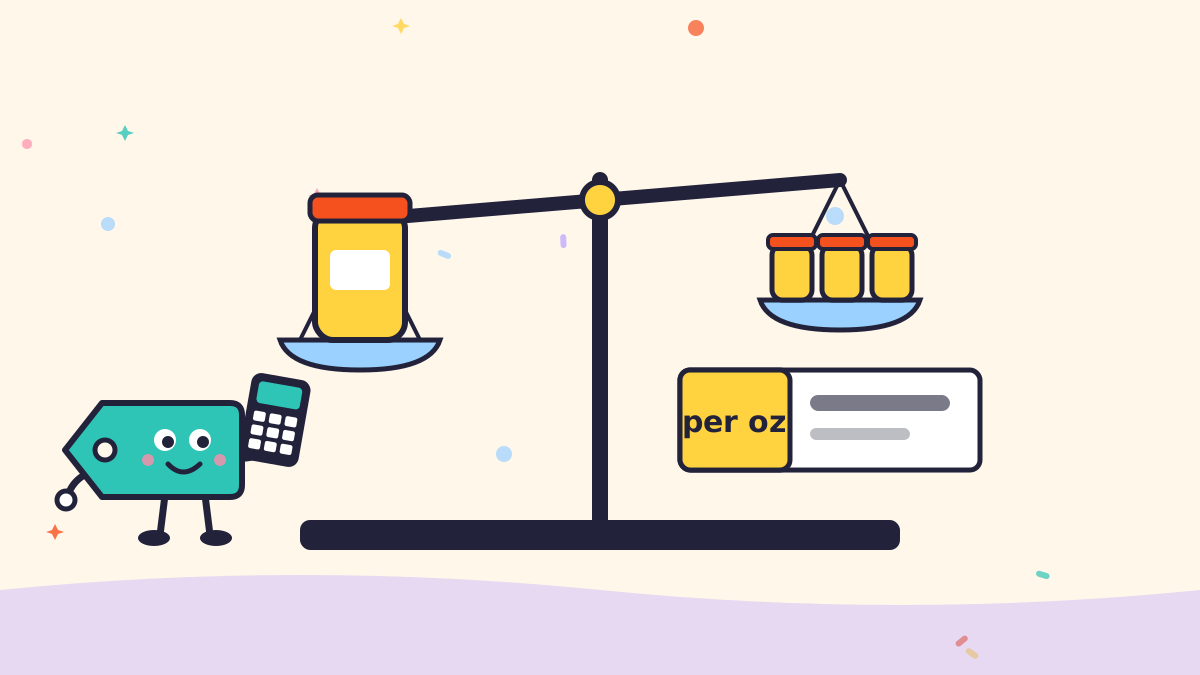 Everyday savingsUnit Price Math: The Five-Second Check That Beats Most Pack-Size TricksHow to read and calculate unit prices, when the bigger pack is not the better buy, and how shrinking pack sizes hide price rises.Read the guide
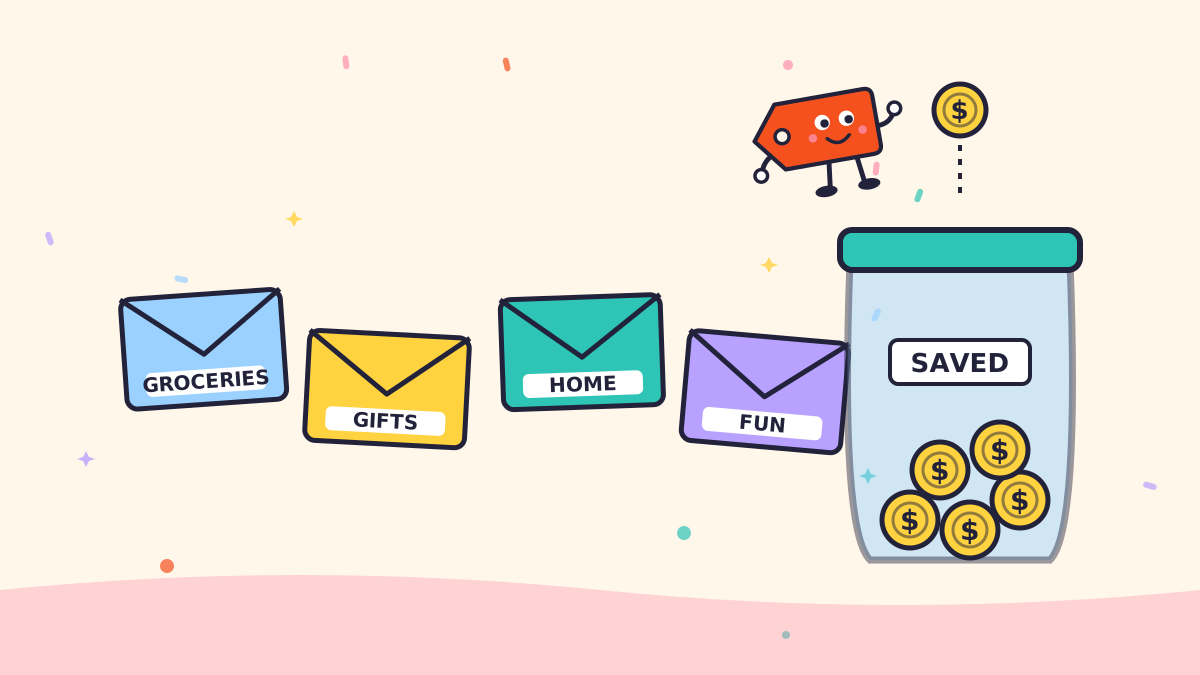 BudgetingBudgeting for Deal Hunters: Save Money, Not Just PercentagesA simple budgeting approach for people who love a deal: planned-purchase lists, sinking funds, a 'deal buffer', and how to count savings honestly.Read the guide
 CashbackCashback Portals and Card Rewards: How the Money Actually Comes BackHow cashback portals, card-linked offers and card rewards work, why cashback sometimes fails to track, and how to use them without overspending.Read the guide