
Return Policies Decoded: Read the Exit Before You Buy
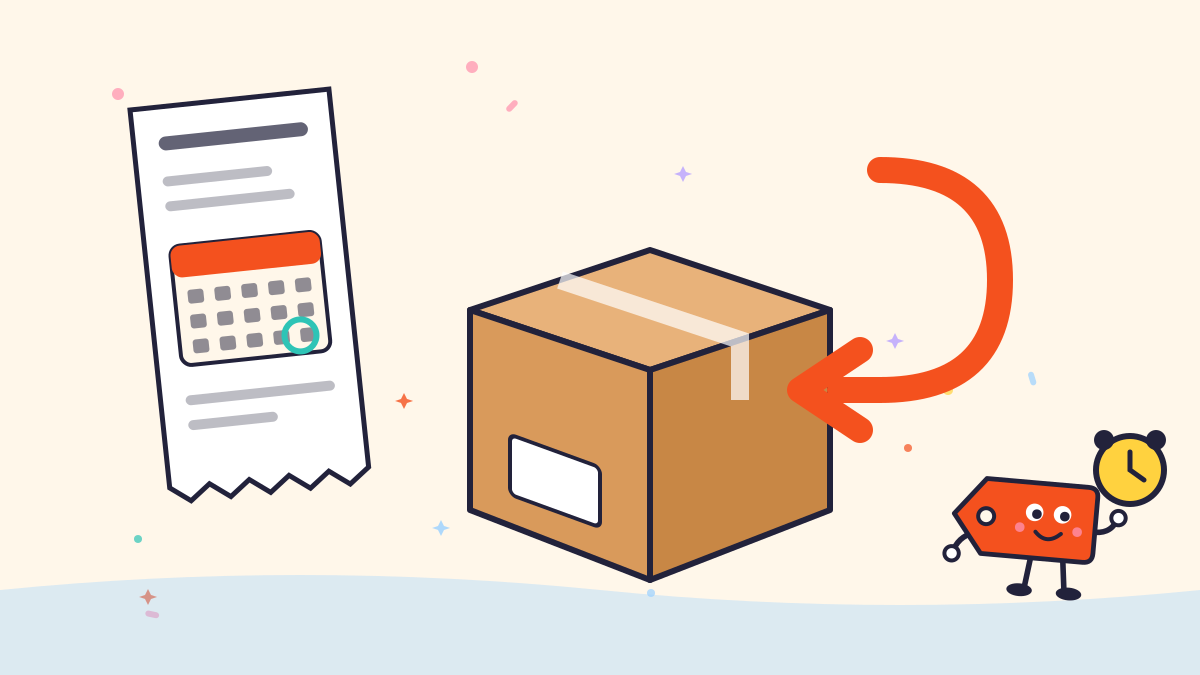
A return policy is part of the price. Two stores can charge the same amount for the same item, but if one lets you send it back free for a month and the other charges for return postage and a restocking fee, they are not really selling at the same price. The cheaper checkout can turn into the more expensive purchase the moment something does not fit or does not work.
Return policies are usually linked in the footer of a store's site, and they are often shorter than they look. Here is what to scan for, in the order it tends to matter.
The six things every return policy answers
- The window. How many days you have, and whether the clock starts on the order date or the delivery date. That difference can easily be a week.
- Condition. Whether items must be unused, unwashed, with tags attached, or in original packaging. Some stores accept opened items; others do not.
- Return shipping. Free label, paid label deducted from your refund, or you arrange and pay for postage yourself.
- Fees. Restocking fees, often a percentage, are common on electronics, large items and special orders.
- Refund form. Money back to your original payment method, or store credit only. Store credit is less flexible and may expire.
- Exclusions. Final-sale items, clearance, personalised goods, hygiene items, opened software or media, and gift cards.
Comparing two policies side by side
When you are choosing between stores, it helps to lay the policies out next to each other. The example below is illustrative, not a real retailer, but the trade-offs are very typical.
| Question | Store A | Store B |
|---|---|---|
| Window | 14 days from order | 30 days from delivery |
| Return shipping | Customer pays | Free prepaid label |
| Restocking fee | On opened electronics | None stated |
| Refund type | Store credit for sale items | Original payment method |
| Sale items | Final sale over a set discount | Returnable |
If Store A is a few dollars cheaper, that saving buys you a much narrower exit. For something you are confident about, that may be fine. For shoes, clothing, anything with a fit or compatibility question, or a gift, Store B's price is probably the better value. Our printable checkout comparison worksheet has space for exactly this.
Special cases that catch people out
Marketplace sellers. On large marketplaces, an item may be sold and shipped by an independent seller rather than the platform itself. The seller's return policy may differ from the platform's headline policy, and returns may ship to a different place. Look for "sold by" and "ships from" on the listing.
Holiday extensions. Many retailers extend return windows for purchases made in November and December, often into January. The dates vary by store and year, so check the current policy rather than assuming.
Manufacturer vs store. A store's return window is separate from the manufacturer's warranty. Once the return window closes, a defect is usually handled through the warranty, which may mean repair or replacement rather than a refund.
Open-box and refurbished items. These often come with shorter or different return terms. See our guide to open-box and refurbished buying for more.
Making a return go smoothly
- Keep the order confirmation email and any promotion terms you relied on.
- Photograph the item and packaging when it arrives if it is expensive or fragile.
- Put the last return date in your calendar the day the parcel arrives.
- Keep original packaging until you are sure you are keeping the item.
- Use a tracked return method and keep the receipt or drop-off confirmation until the refund lands.
- If you used cashback or a card-linked offer, expect that to be reversed on a returned item.
Your rights beyond the store policy
Store policies sit alongside consumer protection laws, which differ by country and state. Some places give online shoppers a legal cooling-off period; others do not. Items that arrive faulty or not as described are often treated differently from change-of-mind returns. If a seller refuses a reasonable return, your card issuer may have a dispute process, but the rules and deadlines depend on the issuer. When in doubt, check your local consumer protection agency's guidance rather than relying on the seller's summary.
A one-minute policy scan
You do not need to read every word of a return policy to get what matters. Open the policy page and use your browser's find-in-page feature to search for a handful of words: "days", "restocking", "final", "label", "credit" and "exchange". Those six searches usually surface the window, any fees, the exclusions, who pays postage and whether you get money back or only store credit. If the page does not mention any of them, treat that as a warning in itself and look for a contact method before you buy. A clear, easy-to-find policy is often a sign of a seller that handles returns routinely, which is exactly what you want when something goes wrong.
Frequently asked questions
Does the return window start on the order date or delivery date?
It depends on the store. Many count from delivery, some from the order or ship date. The policy page usually says which; if it does not, assume the earlier date to be safe.
What is a restocking fee?
A charge, often a percentage of the price, deducted from your refund when you return certain items, most commonly opened electronics, large items or special orders.
Can a store refuse a return within the window?
Yes, if the item does not meet the stated conditions, such as missing parts, signs of use or removed tags. Faulty items are often handled differently from change-of-mind returns.
Is store credit as good as a refund?
Not quite. Store credit only works at that store, may expire, and cannot be used to buy the item elsewhere at a better price. Treat a store-credit-only policy as a small cost.
Related articles
 Buying smartOpen-Box, Refurbished and Renewed: What the Labels Usually MeanThe difference between open-box, manufacturer-refurbished, seller-refurbished and used items, what condition grades usually mean, and what to check about warranty and returns.Read the guide
 Deal basicsHow to Spot a Real Deal (and a Dressed-Up Regular Price)A practical way to tell a genuine discount from a big red 'was' price: reference prices, price history, total cost and the questions worth asking before you buy.Read the guide
 Store policiesPrice Matching and Price Adjustments: How to Ask, and When It WorksWhat price matching and post-purchase price adjustments are, the conditions stores usually attach, and how to ask politely with the right evidence.Read the guide