
Coupon Stacking Explained: What Combines, What Doesn't, and Why
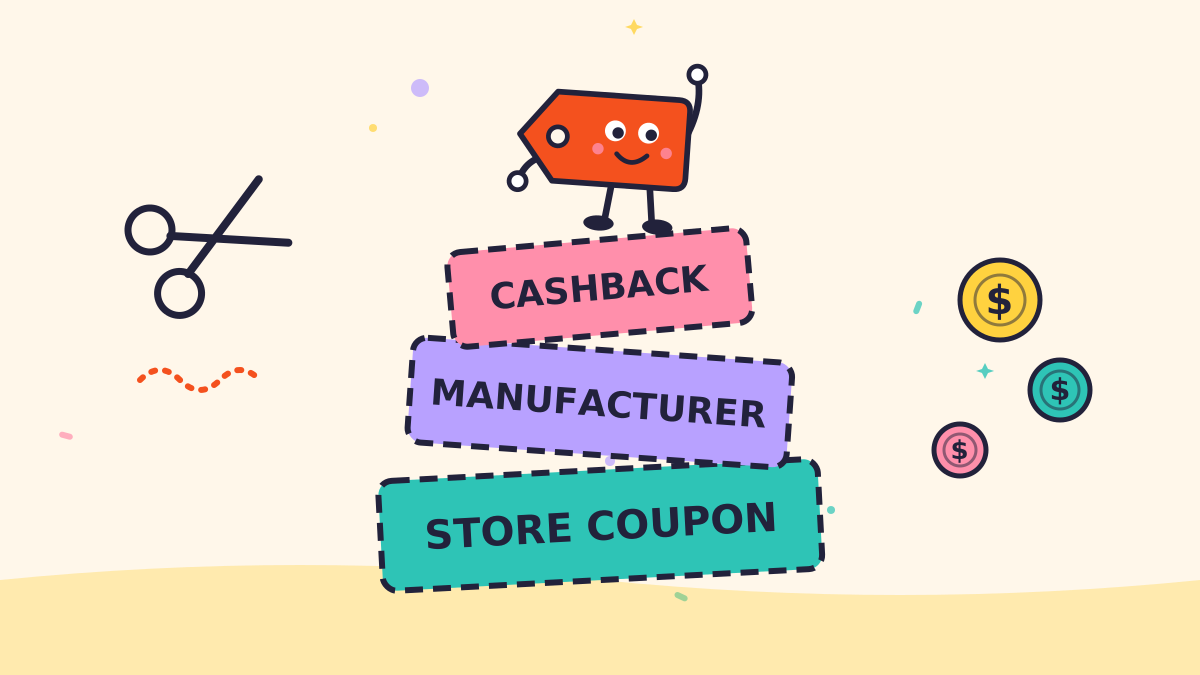
Coupon stacking means applying more than one discount to the same purchase. Done well, it is how ordinary shoppers turn a modest sale into a genuinely good price. Done carelessly, it is how people spend twenty minutes hunting codes for a stack the store's system was never going to accept.
The good news is that stacking follows a fairly predictable logic once you know which kind of discount is which, and who is paying for it. This guide will not hand you codes. Anything we could list would be out of date or unverified by the time you read it. Instead, it explains how to build a stack yourself and check that it will hold.
The four layers you can usually combine
Most stacks are built from discounts that come from different sources. Because each one is funded by a different party, stores are more likely to let them sit on top of each other.
- The store's own sale price. The shelf or listing price already reduced by the retailer.
- A coupon or promo code. Either a store coupon (funded by the retailer) or a manufacturer coupon (funded by the brand). In physical grocery and pharmacy shopping, many stores allow one store coupon plus one manufacturer coupon per item; online, many checkouts accept only one promo code per order.
- Cashback or rewards. Money returned after the purchase through a cashback portal, a store loyalty program or a card-linked offer.
- Payment method rewards. The ordinary points or cash back your card earns on any spending.
Layers one and two reduce what you pay at the register. Layers three and four come back to you later, and some of them can fail to track, so treat them as a bonus rather than part of the price you are counting on.
The order discounts are applied in
Order matters because percentage discounts are calculated on whatever amount is left when they apply. Many checkouts take fixed-amount coupons ("$10 off") before percentage coupons, but some do the reverse, and store policies vary. With two percentage discounts, you do not add the percentages together; you multiply what remains.
Start: $50.00
After 20% sale: $50.00 × 0.80 = $40.00
After extra 10% code: $40.00 × 0.90 = $36.00
Total discount: $14.00, which is 28% off, not 30%
Cashback percentages are also usually calculated on the amount you actually paid after discounts, and often exclude taxes, shipping and gift card purchases. So a 5% cashback offer on that $36 basket returns about $1.80, not 5% of the original $50.
Rules that stop a stack
Stacks fail most often for reasons printed in the terms. Before you get attached to a combination, scan the promotion details for these phrases.
- "Cannot be combined with other offers." The most common blocker. It usually refers to other coupons or promo codes, not to cashback that pays out later, but read it carefully.
- "Excludes sale items" or "full-price items only." A code may apply to the basket but skip anything already discounted.
- Brand or category exclusions. Popular brands and electronics are frequently excluded from sitewide codes.
- "One per customer" or "first order only." Welcome codes are typically tied to a new account or email address.
- Cashback conditions. Many cashback portals say that using a coupon code not listed on their site may void cashback. This is one of the easiest ways to lose a layer without noticing.
How to build a stack without wasting an afternoon
A quick routine keeps stacking efficient. First, find the lowest honest price for the exact item across a couple of stores, before any coupons. Second, check the retailer's own coupon page or app, since codes published by the store itself are the most likely to work. Third, if you use a cashback portal, open the store through it last before checking out, and only use codes the portal lists or permits. Fourth, pay with the card that gives you the best ordinary reward for that category.
Then look at the final checkout total, not the list of discounts. If the stack saves you a dollar more than a simple sale price at a store with a better return policy, the simpler option may be the smarter one.
Stacking etiquette and staying on the right side of the rules
Stacking within a store's published rules is normal shopping. What causes trouble is using coupons that are counterfeit, expired, or for a different product size, or trying to use one manufacturer coupon on several items. Stores can refuse coupons, and cashiers are following policy when they do. If a code or coupon looks too generous, came from an unknown source, or asks you to "claim" it by entering personal details, skip it. A genuine code is just a string you type at checkout.
Frequently asked questions
Can I use two promo codes online?
Most online checkouts accept only one promo code per order. A few allow a store code plus a gift card or a loyalty reward, which are applied separately. The checkout will usually tell you if a second code replaces the first.
Does cashback count as stacking?
Yes, in the sense that it adds another layer of savings. It is paid after purchase, can take weeks to confirm, and can fail to track, so do not count on it when deciding whether the price is good.
Why did my coupon give less than I expected?
Usually because it applied after another discount, excluded some items in the basket, or was calculated before tax and shipping. Check the order summary line by line.
Where do reliable coupon codes come from?
The retailer's own website, app or email list are the most reliable sources. Codes from third-party sites can be expired or restricted, so treat them as possibilities, not promises.
Related articles
 CashbackCashback Portals and Card Rewards: How the Money Actually Comes BackHow cashback portals, card-linked offers and card rewards work, why cashback sometimes fails to track, and how to use them without overspending.Read the guide
 Deal basicsHow to Spot a Real Deal (and a Dressed-Up Regular Price)A practical way to tell a genuine discount from a big red 'was' price: reference prices, price history, total cost and the questions worth asking before you buy.Read the guide
 CheckoutFree Shipping Thresholds: When Adding to Cart Saves Money (and When It Doesn't)The math behind free-shipping minimums, when a filler item makes sense, alternatives like in-store pickup, and how shipping memberships compare.Read the guide